
5 Cannes lightning insights
09.22.26
5 Cannes Lions 2026 takeaways shaping experiential marketing in 2027
Earlier this summer, the Invision team attended Cannes Lions and returned with plenty of inspiration and just as many questions. If you weren’t there, you may still be wondering what was actually worth paying attention to.
The most interesting thing about Cannes isn’t necessarily what everyone is talking about in the moment. It’s what stays with you once you’re home.
What keeps resurfacing? What changes the way you think about your work? And what may no longer be worth chasing?
Those questions shaped our recent webinar, From hype to insight: Cannes, 90 days later, featuring Evan Strange, VP of Strategy; Claire Carroll, Strategy Director; and Michelle Bartosiewicz, Senior Creative Director. Each brought a different perspective shaped by their firsthand experience at Cannes.
Rather than recap individual brand activations, we’ve distilled the conversation into five broader ideas our team is still thinking about as experiential marketers plan for 2027.
Here are five Cannes lightning insights.

Connected everything
The future is integrated: events, content and comms designed together as one connected brand experience.
The strongest brand experiences build from one moment to the next. They create anticipation before an event, deepen engagement during it, and keep the conversation and value going afterward.
That requires a more integrated approach, with experience strategy, content, comms, and amplification designed together from the start.
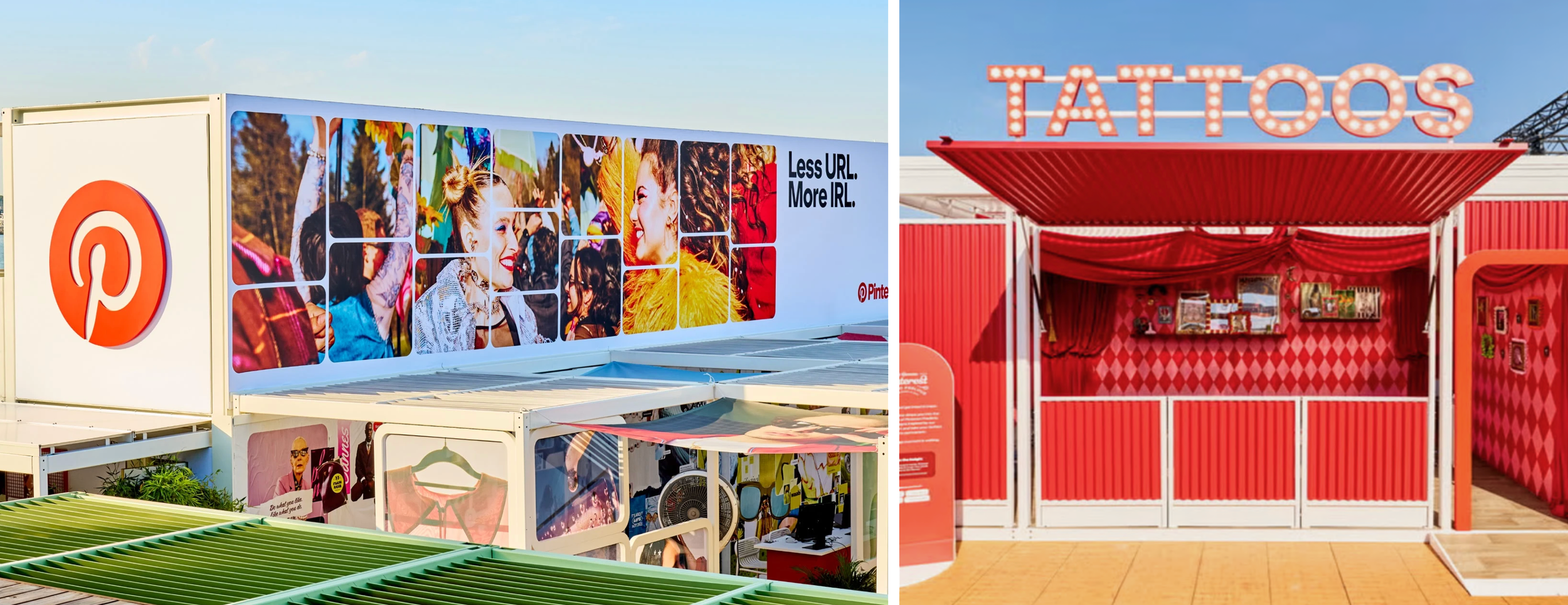
Pinterest brought this idea to life through its “Less URL, More IRL” campaign. Launched before Cannes, the campaign became a physical activation where guests could make things, get tattoos and experience the brand firsthand. Afterward, coordinated email and social content carried the same message forward, extending the experience beyond the beach.

Less is more
Sometimes the most powerful experiential design choice is restraint.
Along the Croisette, the volume of programming, content, swag and spectacle could be exhilarating, but also exhausting. When every moment demands attention, “engagement” can quickly have the opposite effect.
The most memorable experiences created space to absorb the moment, discover something new or have an unexpected conversation. They showed that restraint can help people engage more deeply by giving an experience room to breathe.
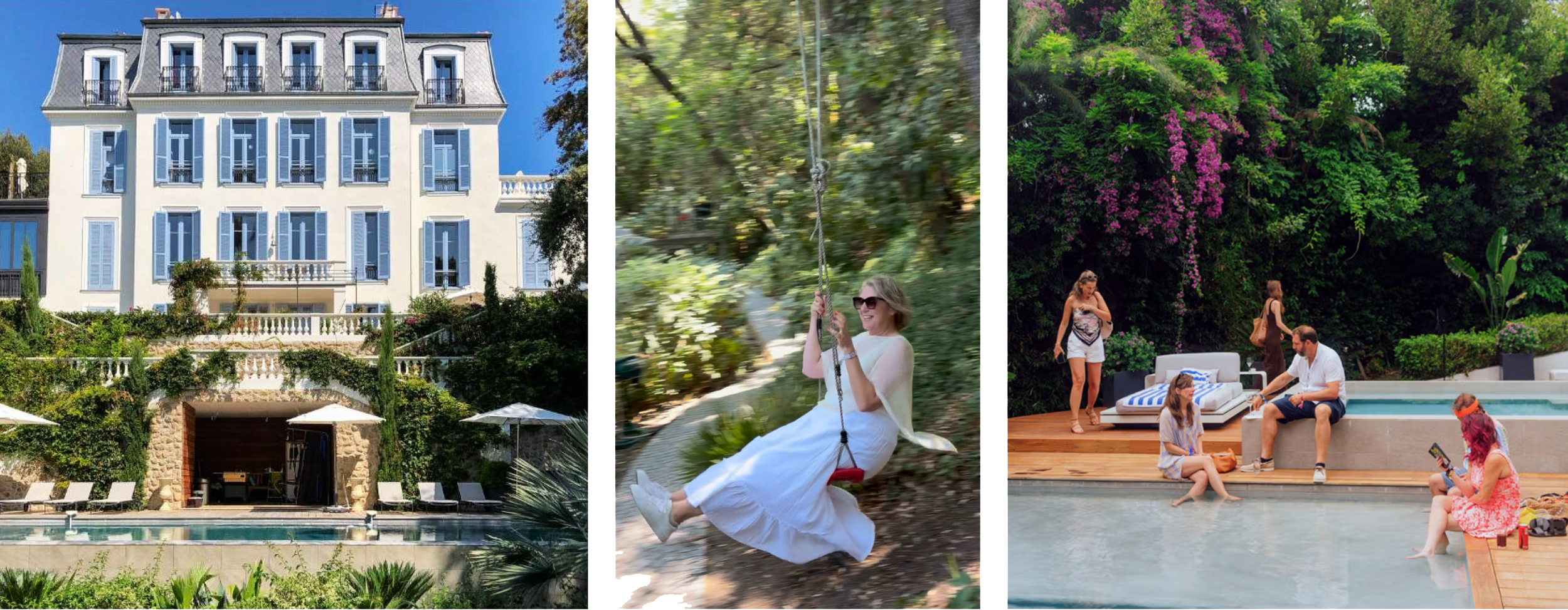
Collins House offered a quiet retreat in a chateau away from the noise of the Croisette. Intimate conversation spaces, a no-lanyards policy and a thoughtfully curated mix of attendees helped people connect naturally. Its restraint made the experience stand out without adding more programming or spectacle.

Uniquely ours
The best of personalization, designed for shared experiences.
Personalization may be table stakes, but the strongest experiences at Cannes didn’t isolate attendees in individual journeys. They offered choice while preserving the reason people gather in person: to participate in something meaningful together.
That could mean asking attendees to collectively determine what happens next, letting them choose relevant activities before reconvening or having each person contribute one piece of a larger solution. The goal is to use individual input to create a shared experience no one could replicate alone.
SPORT BEACH balanced individual choice with shared participation. Attendees could choose from pickleball games, breakfast workshops and other activities, but each experience was designed to bring people together rather than separate them into individual journeys.
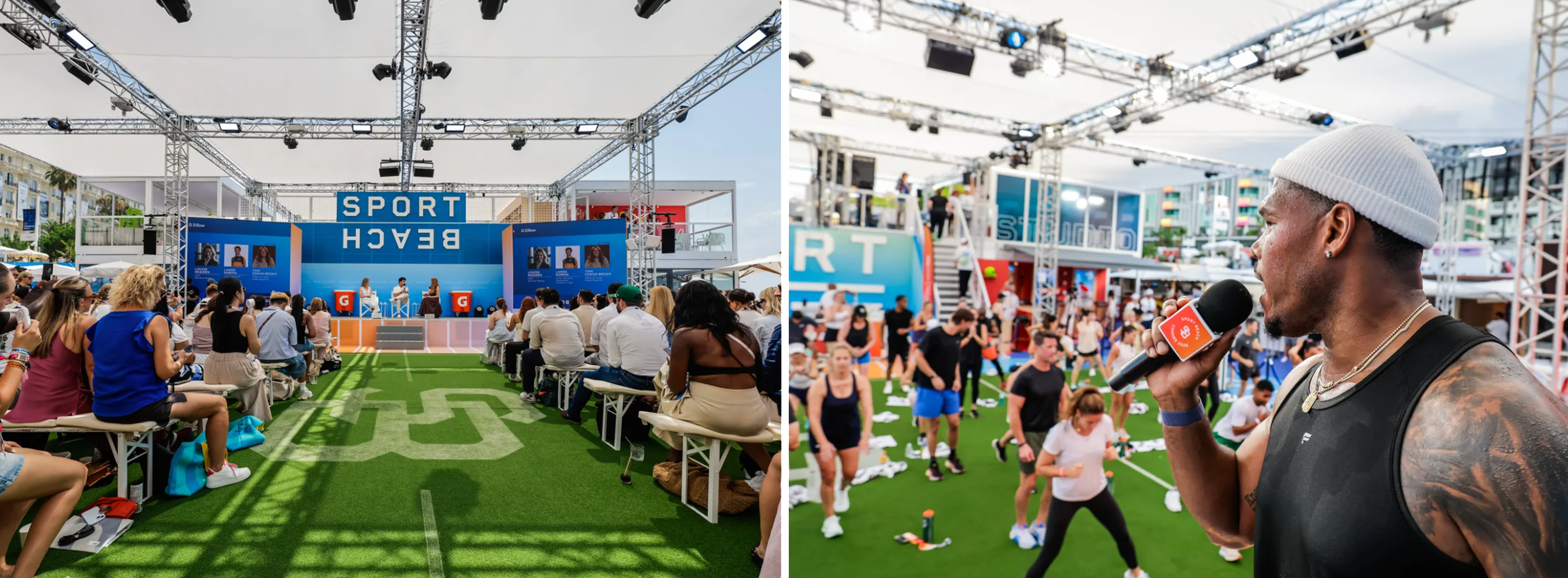
Photo: Courtesy of Sport Beach

Human > AI
Human-made is the new organic sticker.
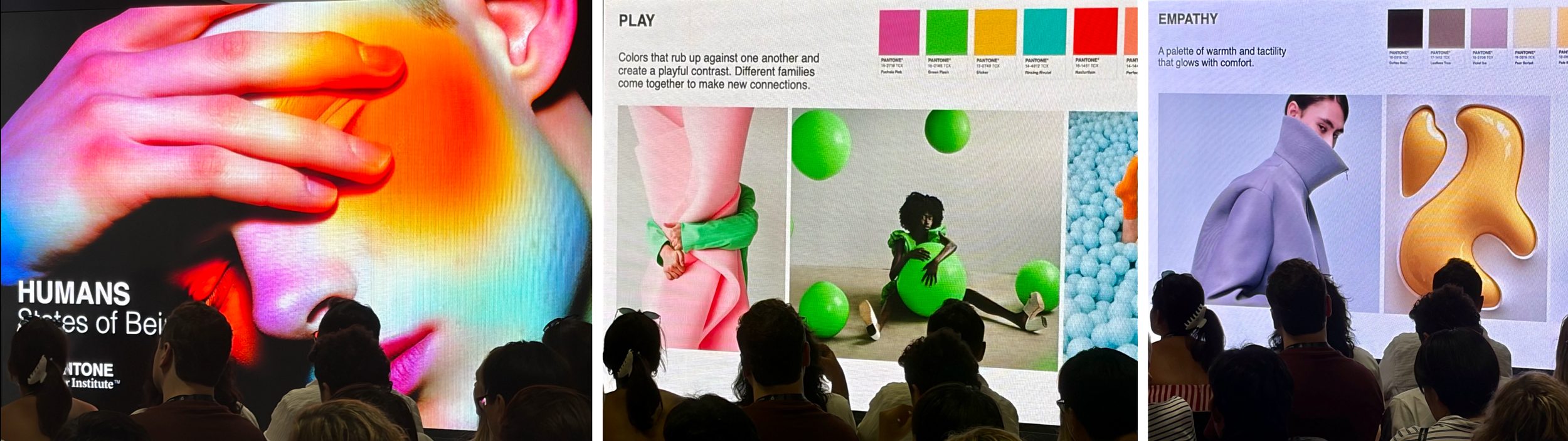
AI was everywhere at Cannes, but its presence made the value of human creativity even clearer. A panel co-hosted by Pantone focused on the qualities AI cannot replicate, including empathy, playfulness, imperfection, emotion and the human judgment behind the work.
For experience designers, that means encouraging brands to embrace more humanity and vulnerability. Perfectly polished work does not always build trust. Sometimes, the imperfections are what make an experience feel real.
At a panel co-hosted by Pantone, speakers described human-made work as a signal that real thought, judgment and a heartbeat are behind the idea. It offered a simple reminder of why empathy, playfulness, emotion and imperfection still matter in a world increasingly shaped by AI.

Measure what moves
Measure what happened. Understand what mattered.
Attendance, impressions and leads tell us what happened, but not always what mattered. Attention, emotion, trust, memory and belief are harder to quantify, yet they often drive the behaviors we ultimately want to measure.
The next evolution in measurement is not facts or feelings. It’s facts and feelings. Experiential marketers need to look beyond what people did to better understand what moved them and what stayed with them.
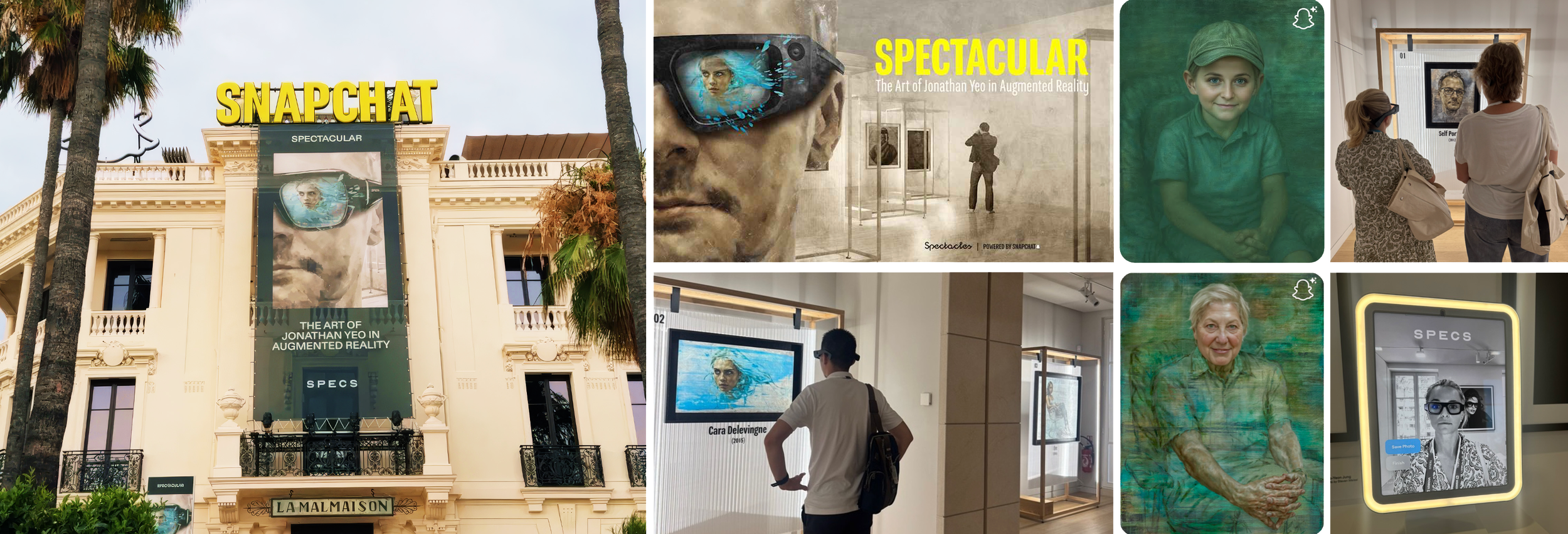
Snapchat’s Spectacles activation made this idea tangible. Guests watched portraits by artist Jonathan Yeo come to life through augmented reality, then saw their own photos incorporated into the artwork. The experience created a lasting association with Spectacles, demonstrating the kind of brand memory that attendance and impressions alone cannot capture.
As experiential marketers, our job is not simply to create more moments. It is to create moments that matter. That means designing experiences that are distinctive, human, participatory and connected, while looking beyond the event itself to what people will feel, remember and do next.
Together, these takeaways can help shape 2027 planning: connect the full journey, create space for participation, make choices only the brand can own and measure what truly matters.
For more context behind each takeaway, watch the full webinar, From hype to insight: Cannes, 90 days later.

Evan Strange is a VP of Strategy at Invision, an award-winning corporate experiential marketing and event production agency. Evan develops audience-centered experience strategies and integrated campaigns grounded in business objectives, data and insight. His work spans immersive brand experiences and major events, including the Super Bowl, SXSW, CES and Austin City Limits.

Claire Carroll is a Strategy Director at Invision, an award-winning corporate experiential marketing and event production agency. Claire works with industrial and technology clients to develop brand experiences and integrated communications campaigns that drive meaningful engagement and measurable business outcomes.

Michelle Bartosiewicz is a Senior Creative Director at Invision, an award-winning corporate experiential marketing and event production agency. Michelle creates consumer and B2B brand experiences across the CPG, wine and spirits, technology and pharmaceutical industries. Her work includes award-winning experiential programs for Dell Technologies.